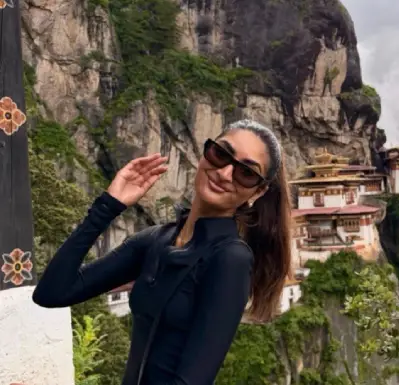
There are wildlife encounters you hope for, and then there are the ones you could never have imagined. For me, Jawai was the latter.
Tucked away in Rajasthan, Jawai is a landscape of open grassland, enormous granite boulders and quiet lakes, where leopards roam among villages and grazing livestock. It’s a very different kind of safari from what you might experience in Africa, and even from India‘s better-known tiger reserves. Rather than vast national parks and open savannah, here you’re exploring a rural landscape where wildlife and everyday life exist side by side. Just a few hours from Jodhpur, I found myself experiencing one of the most extraordinary wildlife encounters of my life.
From Jodhpur to the wilderness
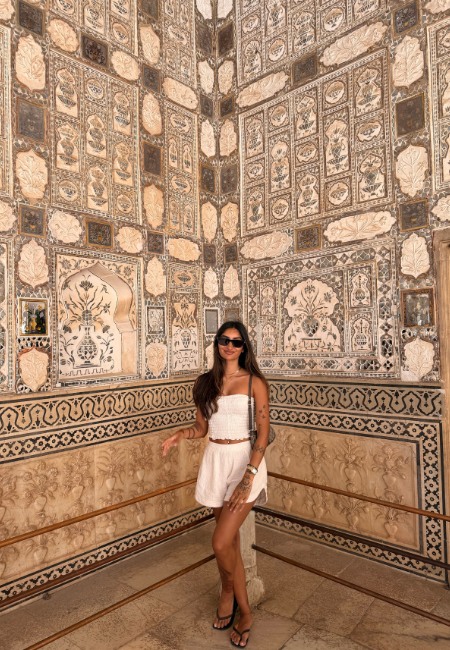
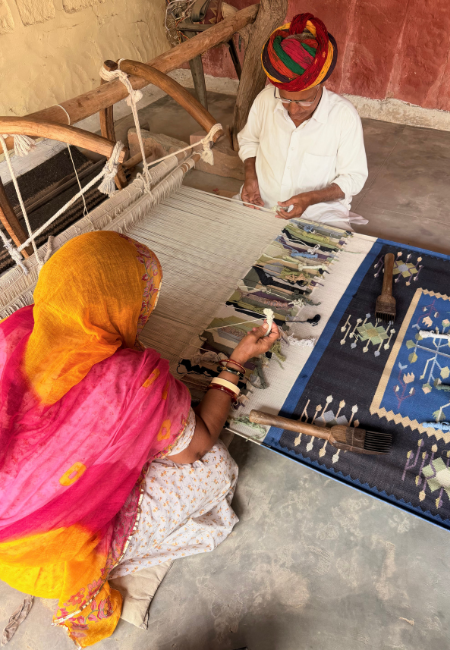
After a few nights in Jodhpur, my mum and I spent the morning visiting a local Bishnoi village, where I tried my hand at pottery, watched a traditional turban being tied and visited an artisan making dhurrie rugs. It was a lovely glimpse into rural Rajasthan before we continued to Jawai.
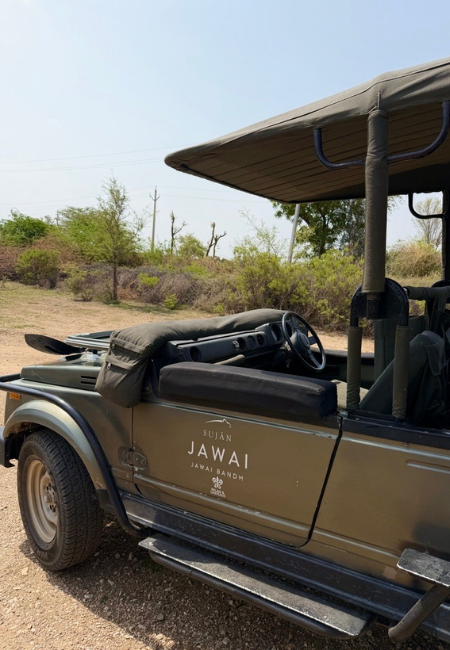
Our driver, Mr Puranji, dropped us off at the point where we swapped our road vehicle for an open-air safari jeep. After a rather bumpy 15-minute drive across grassy tracks, we arrived at camp to a cold drink and refreshing towel before being shown to our Jawai Leopard safari lodge.
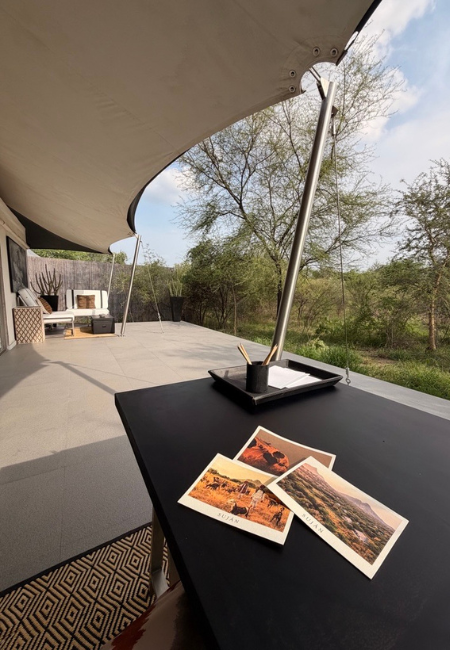
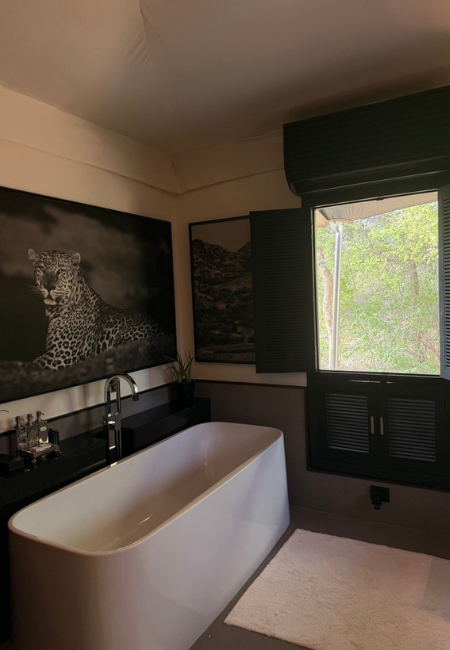
It was beautiful: spacious, full of character and wonderfully individual, with none of the predictable feel that luxury accommodation can sometimes have. But one of my favourite details was surprisingly simple. Three postcards had been left for us, each featuring photographs of local life and leopards captured in the surrounding landscape.
I took a moment to sit out on the porch and write the postcards, taking in the surrounding wilderness and the feeling that we had the place almost entirely to ourselves. I felt completely at peace. There was no rush to be anywhere or do anything, just time to slow down and enjoy where we were. It was one of those lovely travel moments you don’t plan for, but end up remembering just as much as the bigger experiences.
A different kind of leopard safari
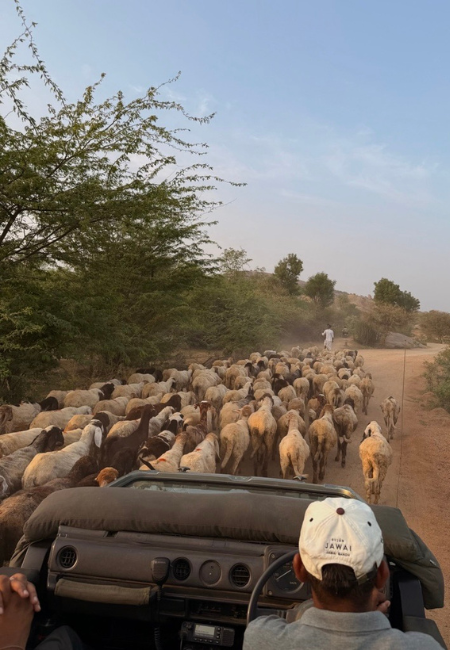
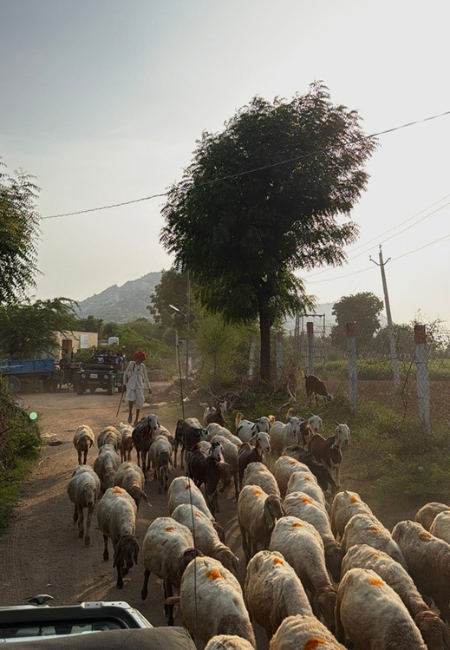
After lunch, which was included in our stay, we headed out on our first game drive. As we drove through local villages, we watched Rabari herders moving their cows and sheep through the countryside. It was a lovely introduction to a part of Jawai I hadn’t fully appreciated before arriving: this isn’t a wilderness separated from human life. It is a living, working landscape.
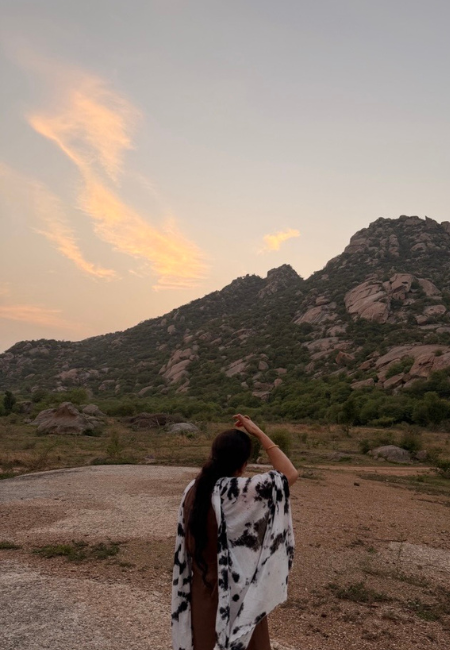
A little further on, the scenery began to change. Granite boulders rose out of the landscape, with rocky outcrops overlooking a peaceful lake. We stopped to take it all in as the sun began to set.
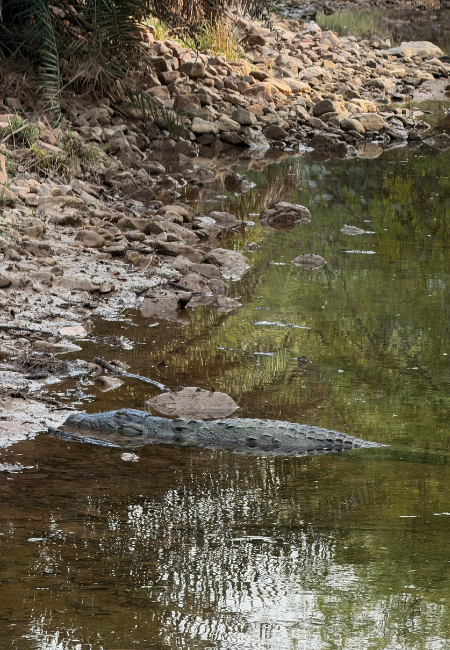
There was something quite magical about that moment. The lake was peaceful, birds moved across the water, and the rocks caught the last of the evening light. Everything felt almost silent. We even spotted a crocodile in the distance, which was an unexpected but very exciting addition to the scene.
Across the rocks, we spotted leopards perched in the distance, visible through binoculars. We even watched a mother and her cub playing together.
They were a long way away, but I didn’t feel disappointed. Watching them move naturally across the rocks, seemingly undisturbed by our presence, was a privilege in itself. SP had a brilliant camera and later sent me some wonderful photographs, so I had something to remember the experience by without needing to get any closer.
Having previously experienced tiger safaris in Ranthambore, I noticed a real difference. In busier reserves, the excitement of a sighting can mean several jeeps gathering around an animal, all hoping for the best photograph. Jawai felt much more peaceful. We kept our distance, watched quietly and allowed the leopards to carry on with their lives.
For me, that was precisely what made it so special.
You cannot go to Jawai expecting a close-up photograph of a leopard. Wildlife is unpredictable, and no sighting is guaranteed. Instead, go with an open mind and an understanding that you are entering the animals’ home. The reward is the opportunity to observe them on their own terms.
An unforgettable encounter
And then came the moment I will never forget.
As the sun dipped below the horizon, we stopped on a rock for a cup of cha and took in the last of the evening light. We were getting ready to head back to camp when SP heard that a leopard had climbed down from a nearby rock.
We decided to take a small detour to see whether we might be lucky.
And lucky we were.
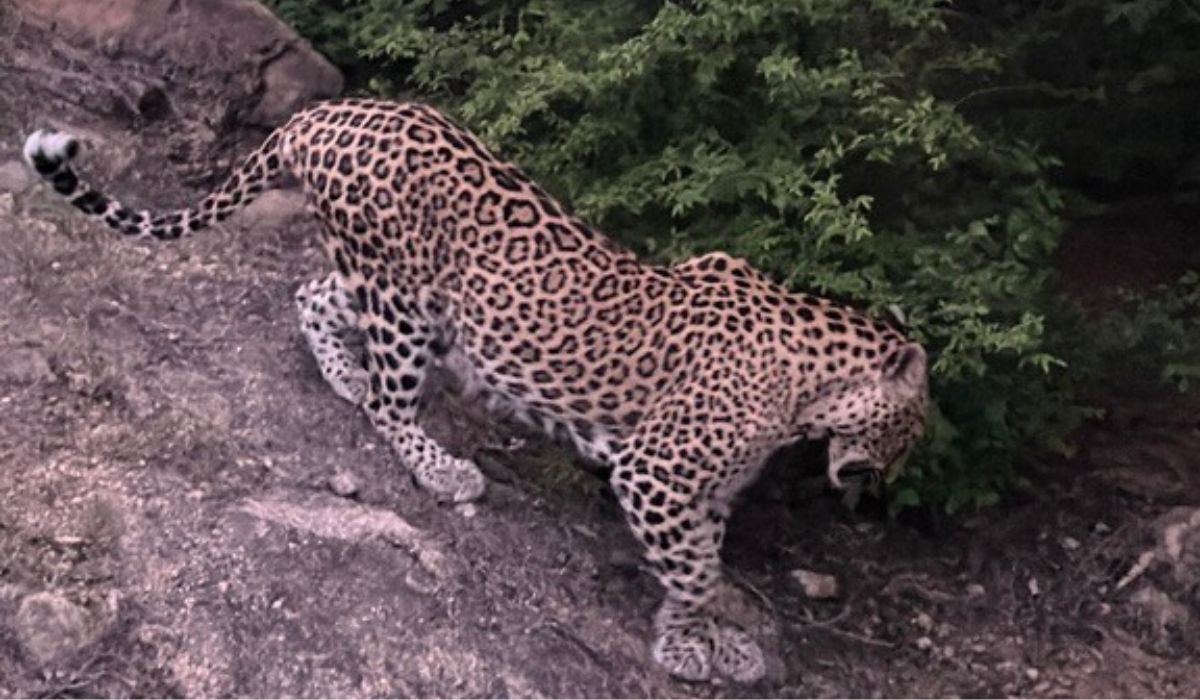
We found ourselves tucked quietly among the bushes when the mother leopard appeared, moving towards the vehicle. Suddenly, she was right there, less than a metre away from me.
We stayed completely still and silent. There was no chasing, no attempt to attract her attention and no trying to get her to move for a photograph. Just a beautiful wild animal passing close by, entirely on her own terms.
I had never expected to experience a leopard at such close quarters. For those few moments, I could hardly believe what was happening. It was one of those rare travel experiences that reminds you why you go in the first place: not to tick something off a list, but to witness something extraordinary that you could never have planned.
The people who share this landscape with leopards
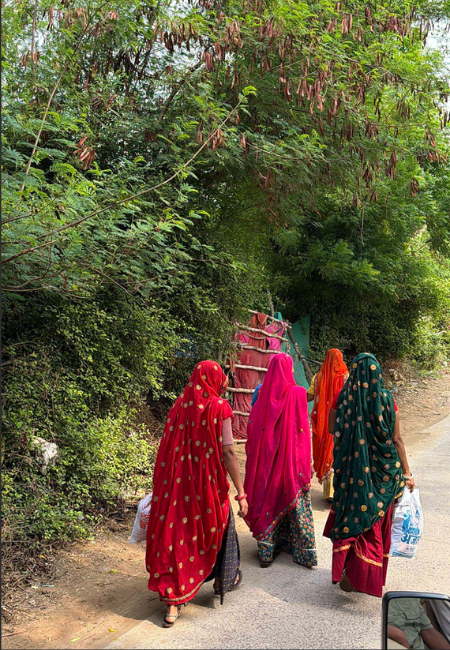
What makes Jawai so fascinating is that the story doesn’t begin and end with its wildlife. The surrounding villages are home to the Rabari, a pastoral community whose traditional way of life is closely connected to the land and their animals.
For generations, Rabari herders have shared this landscape with leopards. Their livestock graze across the same countryside in which the big cats hunt, and the two have adapted to living alongside one another in a way that feels remarkable when you consider how difficult human-wildlife coexistence can be elsewhere.
Of course, living alongside leopards isn’t always easy. When livestock is lost, the financial impact on a farming family can be significant. Government compensation may be available, although the process can be slow, which is where private wildlife organisations and conservation groups can step in to support local farmers.
This part of the story resonated with me personally. My own family comes from a farming background in Punjab, so I understand how much animals and livelihoods can mean to a family. It was reassuring to learn about the organisations working to support the people who share their land with wildlife.
For me, conservation isn’t just about protecting the animals; it’s also about looking after the communities that make coexistence possible.
This is what distinguishes Jawai from a more conventional safari destination. The people aren’t separate from the story of conservation; they are central to it.
Beyond the game drives
The following day, we took time to discover another side of the property and its surroundings, visiting the royal stables on site before heading to Bisalpur village to admire its intricate buildings and traditional Rajasthani architecture.
There was a moment in the village when I felt unexpectedly transported back to my mum’s pind — the Punjabi word for a village. The atmosphere felt quieter and more familiar than the busier Rajasthan I had encountered elsewhere.
It was a lovely reminder that travelling through India isn’t just about discovering new places; sometimes, it brings you closer to places and memories that already feel like home.
Back at camp, the team had arranged a private dinner for my mum and me outdoors, with candlelight, beautiful food and a glass of wine. It was intimate and romantic in its own way, but more importantly, it was a special moment to share together.
It was one of those evenings when you look around and think, how lucky am I to be here?
Why Jawai belongs on your India itinerary
Jawai is a wonderful addition to a tailor-made Rajasthan journey, particularly for travellers looking to experience a different side of India beyond its forts, palaces and historic cities. Combining it with Jodhpur and Udaipur offers a lovely balance of culture, wildlife and time in the countryside.
I’d recommend spending two nights here, as we did, allowing time for several game drives while also enjoying the camp and discovering more about local life. Just remember that this isn’t a conventional national park safari; sightings are never guaranteed, and part of the magic lies in slowing down and observing the leopards without disturbing them.
If you have time to explore further, I’d also consider adding a night at Rawla Narlai, around an hour and a half away by road. We experienced their iconic stepwell dinner, set within a historic stone stepwell illuminated by thousands of hand-lit candles. It was an enchanting evening and another wonderfully immersive way to experience rural Rajasthan. I’ll leave the journey there as a surprise, but it’s an experience I’d wholeheartedly recommend.
For me, Jawai was about far more than seeing leopards. It was the stillness of the landscape, the people who share it with the wildlife, and those unexpected moments that stay with you long after a trip ends.
I’ll always remember that first afternoon: the fading light across the rocks, the quiet of the lake, and a mother leopard appearing beside our jeep when I least expected it.
Jawai reminded me that sometimes the most extraordinary travel experiences happen when you stop trying to chase them.